
Hyundai Kona: ABS (Anti-Lock Brake System) / Repair procedures
Hyundai Kona (OS) 2018-2026 Service Manual / Brake System / ABS (Anti-Lock Brake System) / Repair procedures
| Inspection |
ABS System Bleeding
This procedure should be followed to ensure adequate bleeding of air and filling
of the ESC unit, brake lines and master cylinder with brake fluid.
| 1. |
Remove the reservoir cap and fill the brake reservoir tank with brake
fluid.
|

| 2. |
Connect self-diagnosis connector (16pins) located under the driver side
crash pad to self-diagnosis device, and then turn the self-diagnosis
device after key is ON.
|
| 3. |
Select the "vehicle model" and "ABS/ESC" on GDS vehicle selection screen,
then select OK.
|
| 4. |
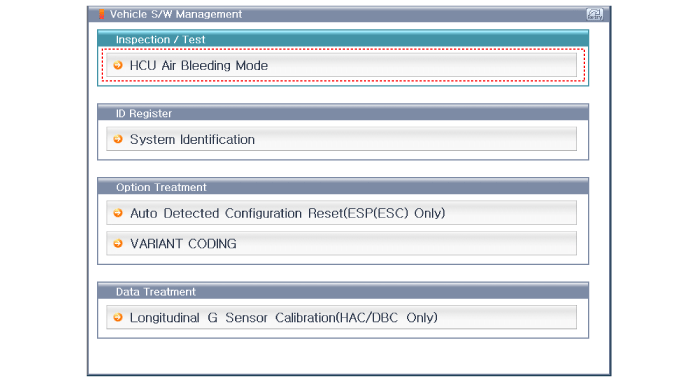
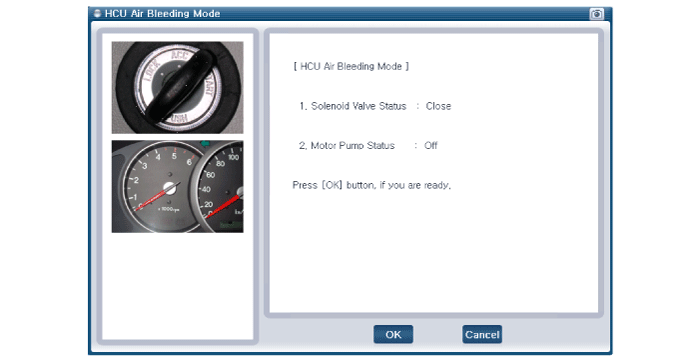
Select HCU air bleeding mode.
|
| 5. |
Have an assistant press the brake pedal several times to pressurize
it and keep it pressed.
|
| 6. |
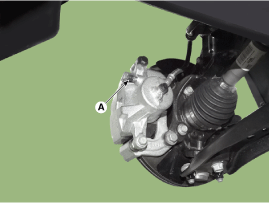
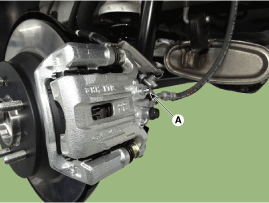
Pump the brake pedal several times, and then loosen the bleeder screw
until fluid starts to run out without bubbles. Then close the bleeder
screw (A).
[Front]
[Rear]
|
| 7. |
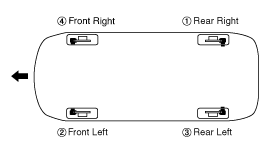
Repeat the procedure for wheel in the sequence shown below until air
bubbles no longer appear in the fluid.
|
| 8. |
The steps should be performed in the order of rear right, front left,
rear left and front right.
|
| 9. |
Refill the master cylinder reservoir to MAX (upper) level line.
|
 Schematic diagrams
Schematic Diagrams
Termianal function
Pin No
Description
Current 12V / 20C (AMP)
Voltage range (V)
...
 Troubleshooting
Standard Flow of Diagnostic Troubleshooting
Notes With Regard To Diagnosis
The phenomena listed in the following table are not abnormal.
Condition
Explanati ...
Other information:
Hyundai Kona (OS) 2018-2026 Service Manual: Components and components location
Component Location
1. Auto light sensor
2. Head lamps
3. Lighting switch (Auto)
4. Rear combination lamp
5. BCM (Body Control Module)
...
Hyundai Kona (OS) 2018-2026 Owners Manual: Battery
WARNING
To prevent SERIOUS INJURY or DEATH to you or bystanders, always follow these
precautions when working near or handling the battery:
Always read and follow instructions
carefully when handling a battery.
Wear eye protection designed
to protect the eyes from acid splashes.
Keep all flame ...
© 2018-2026 www.hkona.com
