
Hyundai Kona: Lighting System / Head Lamps Repair procedures
| Head Lamp Aiming Instructions |
|

| 1. |
Inflate the tires to the specified pressure and remove any loads
from the vehicle except the driver, spare tire, and tools.
|
| 2. |
The vehicle should be placed on a flat floor.
|
| 3. |
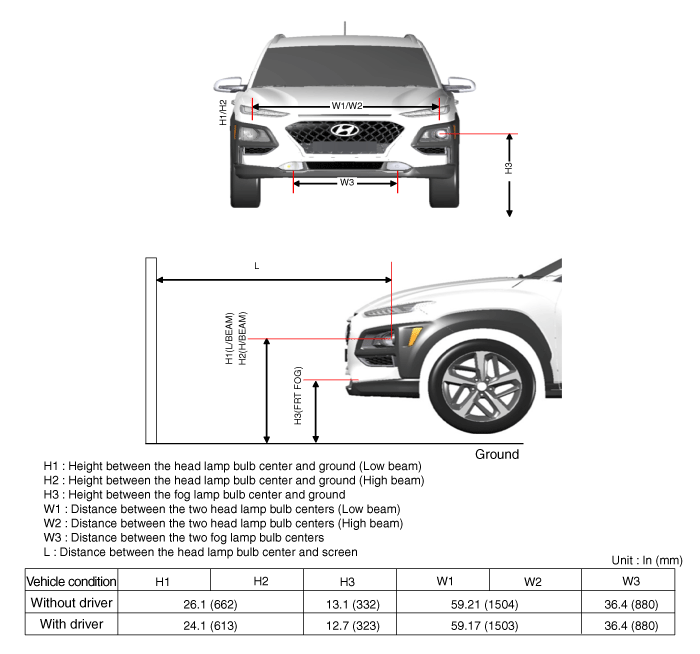
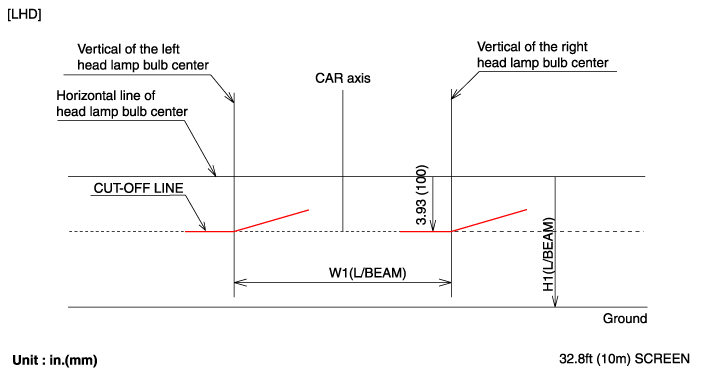
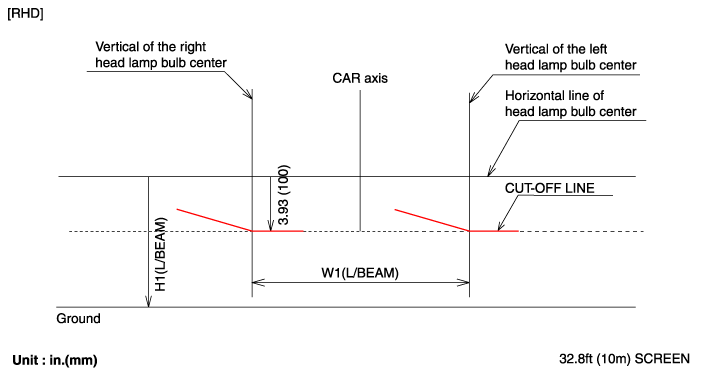
. Draw vertical lines (Vertical lines passing through respective
head lamp centers) and a horizontal line (Horizontal line passing
through center of head lamps) on the screen.
|
| 4. |
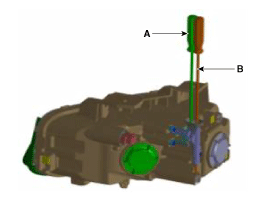
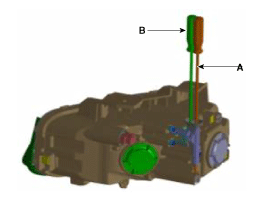
With the head lamp and battery in normal condition, aim the head
lamps so the brightest portion falls on the horizontal and vertical
lines.
A : Vertical (High beam / Low beam)
B : Horizontal (High beam / Low beam)
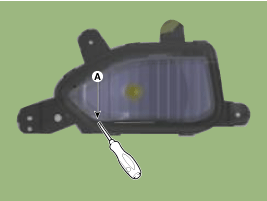
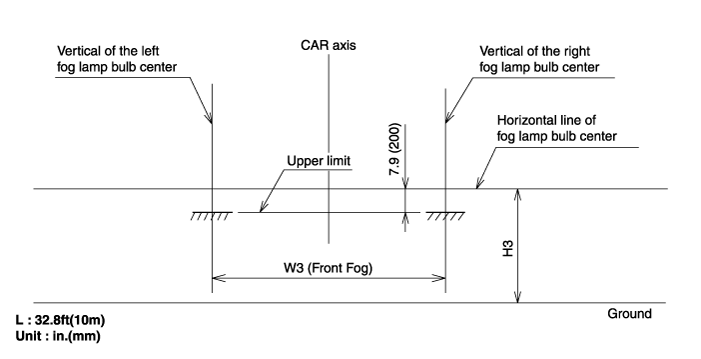
[Front Fog Lamp Aiming]
The front fog lamps should be aimed as the same manner of the head
lamps aiming.
With the front fog lamps and battery normal condition, aim the front
fog lamps by turning the adjusting screw (A) with a driver.
|
| 1. |
Head Lamp (Low beam)
|
| 2. |
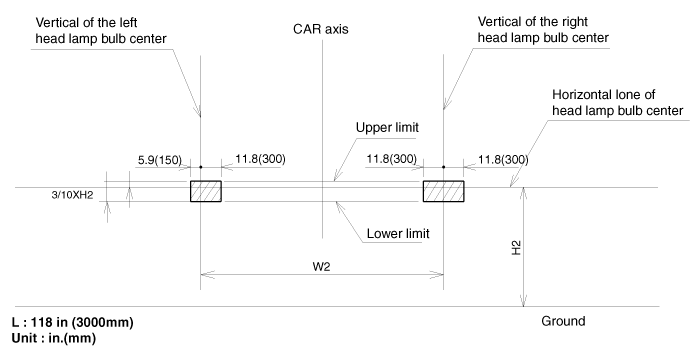
Head Lamp (High beam)
|
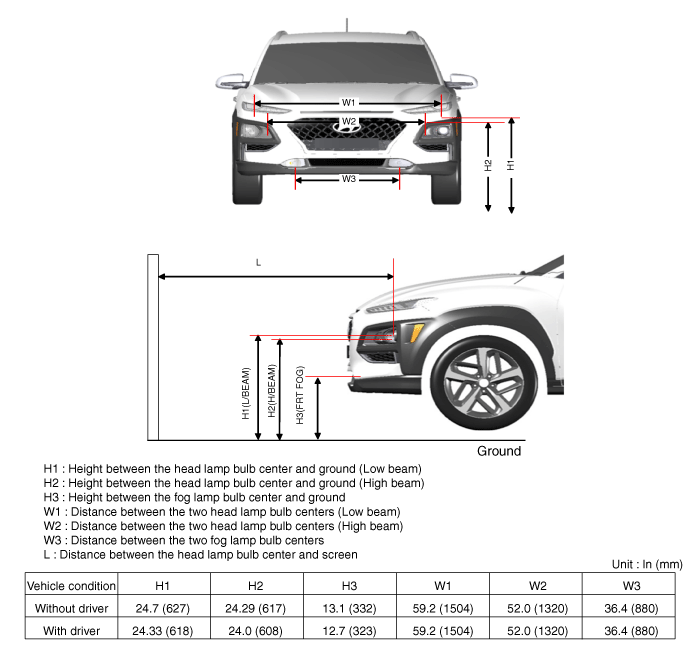
| 3. |
Turn the front fog lamp on without the driver aboard.
The cut-off line should be projected in the allowable range (shaded
region)
|
| Removal |
| 1. |
Disconnect the negative (-) battery terminal.
|
| 2. |
Remove the front bumper cover.
(Refer to Body - "Front Bumper Cover")
|
| 3. |
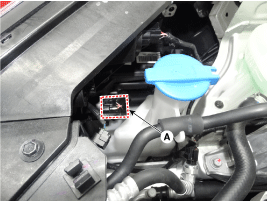
Disconnect the head lamp connector (A).
|
| 4. |
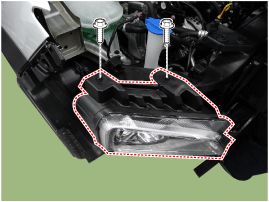
Remove the head lamp after loosening mounting bolts.
|
| Installation |
| 1. |
Install the head lamp assembly after connecting the connector.
|
| 2. |
Install the front bumper corver.
|
| 3. |
Connect the negative (-) battery terminal.
|
| Replacement |
| 1. |
Turn the head lamp power off.
|
| 2. |
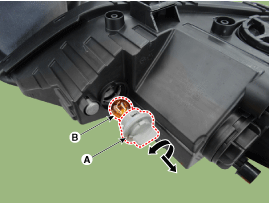
Remove the bulb socket (B) and turn signal lamp bulb (A) from the
lamp assembly.
|
| 1. |
Turn the head lamp power off.
|
| 2. |
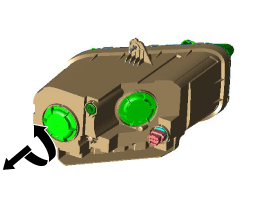
Remove the bulb caps from the head lamp assembly after turning in
the counter clock-wise direction.
|
| 3. |
Remove the head lamp low beam bulb after removing the socket from
the head lamp assembly.
|
| 1. |
Turn the head lamp power off.
|
| 2. |
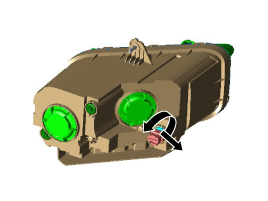
Remove the bulb caps from the head lamp assembly after turning in
the counter clock-wise direction.
|
| 3. |
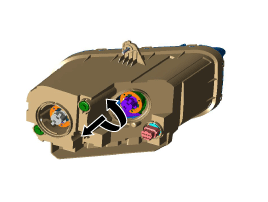
Remove the head lamp high beam bulb after disengaing the retaining
clip and disconnect the lamp connector.
|
 Head Lamps Description and operation
Description
1.
Bulb
(1)
Elements
Xenon gas : Xenon gas activates the initial reaction for
rapid il ...
 Back-up Lamps Repair procedures
Removal
LHD
1.
Disconnect the negative (-) battery terminal.
2.
Remove the rear bubper.
(Refer to Body ...
Other information:
Hyundai Kona (OS) 2018-2026 Service Manual: Rain Sensor Repair procedures
Removal
•
Do not damage or touch the silicone (coupling medium).
•
Be careful so that the silicon is not ...
Hyundai Kona (OS) 2018-2026 Service Manual: Water pump Repair procedures
Removal
1.
Loosen the drain plug (A), and drain the engine coolant. Remove the
radiator cap to drain with speed.
(Refer to cooling system - "Coolant")
2.
Remove the drive belt.
(Refer to Timing System - " ...
